


Māori Wrasse: Facts, Protection and Where to See One Near Cairns
TL;DR: The Māori wrasse is the largest member of the wrasse family, growing to about 2m long and weighing up to 180kg. It’s also known as the humphead wrasse or Napoleon wrasse. The species is endangered globally and is protected as a no-take species in Queensland. It’s famously curious around snorkellers and divers, and outer reefs off Cairns, including Moore Reef and Norman Reef, are good places to look for one.
You’re floating face-down over the coral, sun warm on your back, watching little fish dart about, when a shadow slides into view. You look up. A fish the size of a person is hovering beside you, turning one big eye your way as if to say, “And who are you?”
That’s a Māori wrasse, and it’s one of the reef encounters people tend to remember. Here’s what you need to know about this gentle giant, including where to look for one near Cairns.
What Is a Māori Wrasse?
The Māori wrasse (Cheilinus undulatus) is a large reef fish found across the Indo-Pacific. Adults prefer outer reef slopes, channels and deeper reef habitats, while juveniles tend to live in shallower, coral-rich areas. Adults are generally found from about 2 to 60 metres deep.
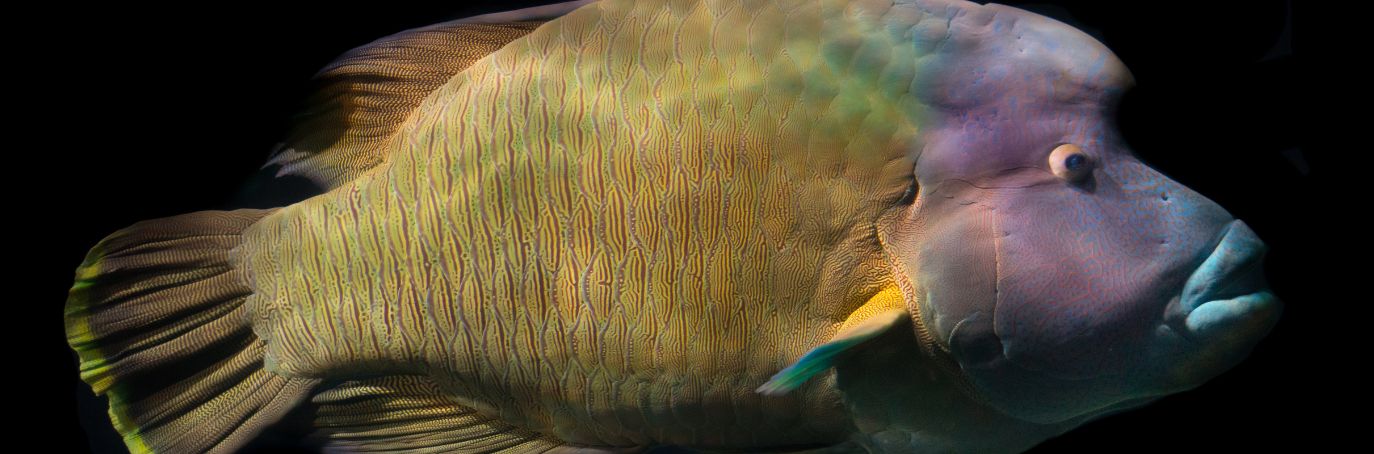
It’s not hard to recognise. Look for thick, fleshy lips, lines across the face and a large bump on the forehead that becomes more pronounced with age. Adults can be blue-green or greenish in colour, with distinctive patterns across the face.
It’s also known as the humphead wrasse and Napoleon wrasse. The “humphead” name refers to the prominent forehead, while “Napoleon” is another long-established common name for the species.
How Big Do Māori Wrasse Get?
Very big. The Māori wrasse is the largest member of the wrasse family, which contains almost 600 species. It can reach about 2m in length and weigh up to 180kg.
| Fact | Figure |
| Maximum length | About 2m |
| Maximum weight | Up to 180kg |
| Lifespan | At least 30 years in the wild |
| Sexual maturity | Around 6 years |
The biggest fish are males, as Māori wrasse typically start life as females and some later change sex.
Do Māori Wrasse Change Sex?
They do. Māori wrasse are protogynous hermaphrodites, which means they typically start life as females and some later change into males.
The change is linked to social and environmental factors. Larger, dominant individuals can become males, which means the biggest fish you see on the reef are often males.
The species is also relatively slow to replace itself. It can live for at least 30 years, and the IUCN notes that its long lifespan, low population growth and breeding biology make it particularly vulnerable to fishing pressure.
What Do Māori Wrasse Eat?
Māori wrasse have a varied diet that includes sea snails, sea urchins, crustaceans and smaller fish. They also eat some toxic animals, including crown-of-thorns starfish. Their strong teeth help them tackle hard-shelled prey.
That crown-of-thorns habit is one of the more interesting things about them. They’re among the reef predators known to eat these spiny starfish, although that doesn’t mean a single wrasse is going to solve a crown-of-thorns outbreak.
Why Are Māori Wrasse Protected?
The Māori wrasse is listed as Endangered on the IUCN Red List, with overfishing for the live reef fish trade one of its main threats. The species is particularly vulnerable because it is naturally uncommon, long-lived and slow to recover from heavy fishing pressure.
The fish is highly valued in parts of the live reef food-fish trade, particularly in South-East Asia. The IUCN reports substantial declines in heavily fished areas and identifies the live fish trade as the species’ most serious threat.
International trade is regulated under CITES Appendix II, which means trade is monitored and controlled.
Here in Queensland, the protection is even clearer. Humphead Māori wrasse is a no-take species, meaning recreational fishers can’t legally take or possess one.
Where Can You See a Māori Wrasse Near Cairns?
Your best bet is an outer reef. Moore Reef, about 40km off Cairns, is one place where Māori wrasse have been recorded, while Norman Reef, further out, is another spot where they’re often seen.
Visiting a reef pontoon? You’ve got several ways to look:
Snorkel from the platform and keep an eye on the deeper water around the reef edge.
Watch from the underwater observatory if you’d rather stay dry.
Take a glass-bottom boat or semi-submersible for another view of the reef.
Join a guided snorkel or dive and ask the crew where Māori wrasse are commonly seen.
There are no guarantees with wild animals, of course. But they’re known for being curious around divers and snorkellers, and some individuals become regular residents around popular reef sites.
Tips for spotting one
Choose the outer reef. Adults favour outer reef slopes, channels and deeper reef habitats, so outer-reef trips give you a good chance of seeing them.
Watch the reef edge. Look beyond the shallower coral towards drop-offs, walls and deeper water.
Go during the day. Māori wrasse feed during the day and shelter in caves and under coral ledges at night.
Stay still and let it come to you. They’re known for their curious nature and can approach divers and snorkellers.
Bring an underwater camera. If one swims over for a look, you’ll have a good chance of getting a photo.
How should you behave around one?
Look, but don’t touch. Give the fish plenty of room and let it decide how close it wants to get.
Don’t feed it yourself. If you’re visiting a reef site where fish feeding takes place, follow the operator’s instructions and only participate as directed.
And stay off the coral. Float where possible, and use designated platforms or sandy areas if you need to stand.
Before You Go
Meeting a Māori wrasse is the kind of reef encounter you’ll remember, so pack your snorkel and keep an eye on the deeper water around the reef edge. If you’d like to try your luck, our Great Barrier Reef Pontoon Adventure spends four hours at Moore Reef, with snorkelling, an underwater observatory and a glass-bottom boat. Happy snorkelling!
Frequently Asked Questions
Are Māori wrasse friendly?
They’re known for being curious around snorkellers and divers and may approach people in the water. They’re still wild animals, so don’t touch or feed them.
How big do Māori wrasse get?
They can reach about 2m long and weigh up to 180kg. The Māori wrasse is the largest member of the wrasse family.
Is a Māori wrasse the same as a Napoleon wrasse?
Yes. Māori wrasse, humphead wrasse and Napoleon wrasse are common names for the same species, Cheilinus undulatus.
Do Māori wrasse change sex?
Yes. They typically start life as females, and some later change into males. The change is influenced by social and environmental factors.
Why are Māori wrasse protected?
They’re listed as Endangered globally, with overfishing, particularly for the live reef fish trade, a major threat. In Queensland, humphead Māori wrasse is a no-take species.
Where can you see a Māori wrasse near Cairns?
Outer reefs including Moore Reef and Norman Reef are good places to look. Norman Reef is particularly known for its giant Māori wrasse. You can look for them while snorkelling or diving, or from glass-bottom boats and underwater observatories where available.
Other Tips & Articles
Check out our other Great Barrier Reef Tours


