


Moore Reef is one of the best reefs to explore the Great Barrier Reef.
Yes, Moore Reef is one of the best places to snorkel on the Great Barrier Reef from Cairns. Clear outer-reef water, healthy coral gardens, abundant marine life, and a permanent pontoon that takes the stress out of the day, even if you’ve never put on a mask before. Here’s everything you need to know before you go.
How Long Does It Take to Get to Moore Reef from Cairns?
Moore Reef sits about 50 kilometres offshore, well inside the Great Barrier Reef Marine Park. From Cairns, the boat ride takes roughly 90 minutes each way, departing from the Cairns Esplanade marina.
The crossing is part of the experience. You’re out on the Coral Sea, watching the coastline drop away behind you and the water shift from murky green to a deep, clear blue. Keep an eye out for flying fish and the odd dolphin on the way out.
A typical day looks something like this:
- Departure: around 8am from the Cairns marina
- Arrival at Moore Reef: approximately 9:30am
- Time on the reef: 4 to 5 hours of snorkelling, diving, and activities
- Return to Cairns: mid-afternoon, usually around 3:30 to 4pm
Is Moore Reef Good for Snorkelling?
It’s one of the better outer reef options you can reach from Cairns, and that distinction matters. Outer reefs sit further from the coast than inner or fringing reefs, which means less runoff, cleaner water, and better visibility. On a good day at Moore Reef, you’re looking at 15 to 20 metres of visibility. That’s a long way down.
Water Clarity and Conditions
Conditions do vary. Wind, season, and recent weather all play a part. The wet season (November to April) can bring stronger winds and choppier seas. The dry season (May to October) generally delivers the calmest, clearest water, and it’s the most popular time to visit.
Even on less-than-perfect days, Moore Reef holds its clarity well compared to reefs closer to shore.

Reef Structure
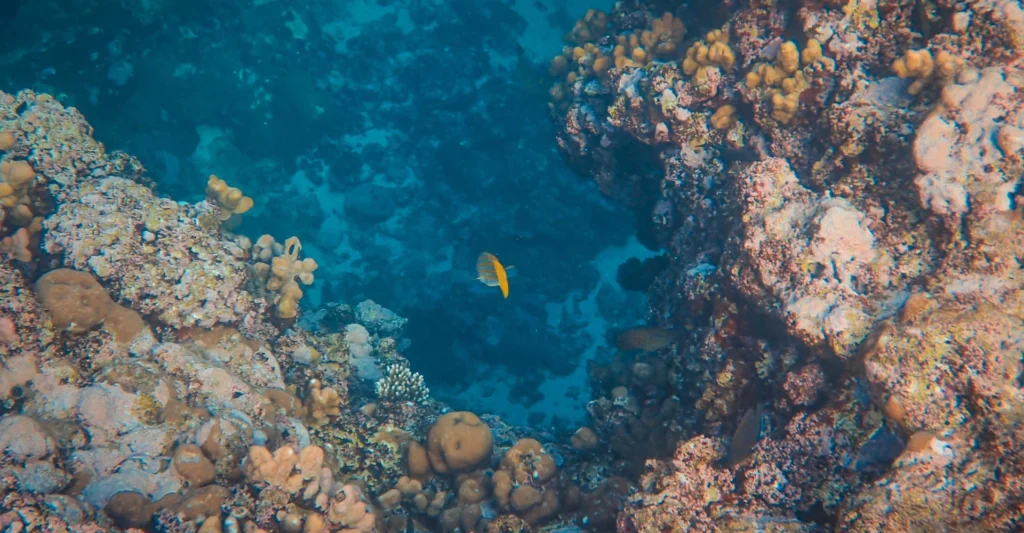
The reef ranges from around 1 metre in the shallows near the pontoon out to 25 metres at depth. For snorkellers, the shallow coral gardens right off the pontoon platform are the main draw. Staghorn, brain, mushroom, and finger corals build up a varied underwater landscape, with plenty of fish darting through the gaps.
The pontoon has a dedicated snorkel platform and a buoyed snorkel trail, so you always know where you are relative to the boat. That structure makes a real difference when you’re getting started.
Good for Beginners
Moore Reef is genuinely accessible for first-timers. You enter the water from the pontoon platform rather than from open water, which takes away one of the things that makes people nervous. Snorkel gear is included, on-site lessons are available before you head in, and lifeguards are on duty throughout the day.
Non-swimmers can still snorkel with a flotation vest and supervision.
Good for Experienced Snorkellers Too
Here’s what you’re actually likely to come across:
Sea turtles are spotted regularly at Moore Reef. The Great Barrier Reef is home to six of the world’s seven species. They tend to blend into the coral, so slow down and look carefully at the reef structure around you rather than just scanning the open water.
Maori wrasse (humphead wrasse) are large, curious fish with that distinctive forehead bump. They often swim right up to snorkellers, which makes for a pretty special moment.
Clownfish (anemonefish) live tucked into sea anemones across the reef. Easy to spot, and a favourite with first-timers.
Batfish are disc-shaped, inquisitive, and often show up to greet the boat on arrival. They hang around in small groups and aren’t shy about it.
Reef sharks (black and white tip) are occasionally spotted near cave overhangs and at depth. They’re no threat to snorkellers. If anything, seeing one is a highlight of the day.
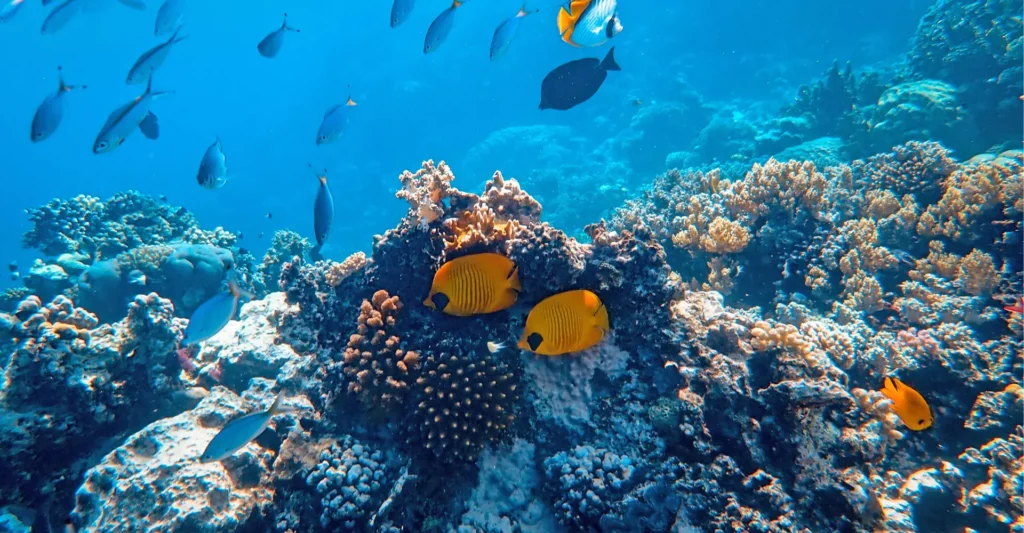
Damselfish, Moorish idols, and parrotfish are common throughout the coral gardens, adding bursts of colour to the reef wherever you look.
The coral itself is worth slowing down for. Staghorn and finger corals create branching structures that shelter hundreds of smaller fish, while the flatter mushroom and brain corals make up much of the reef floor.
What Else Can You Do at Moore Reef Pontoon?
Snorkelling is the main event, but the pontoon has a few other options if you want a change of pace or you’re travelling with people who’d rather stay dry.
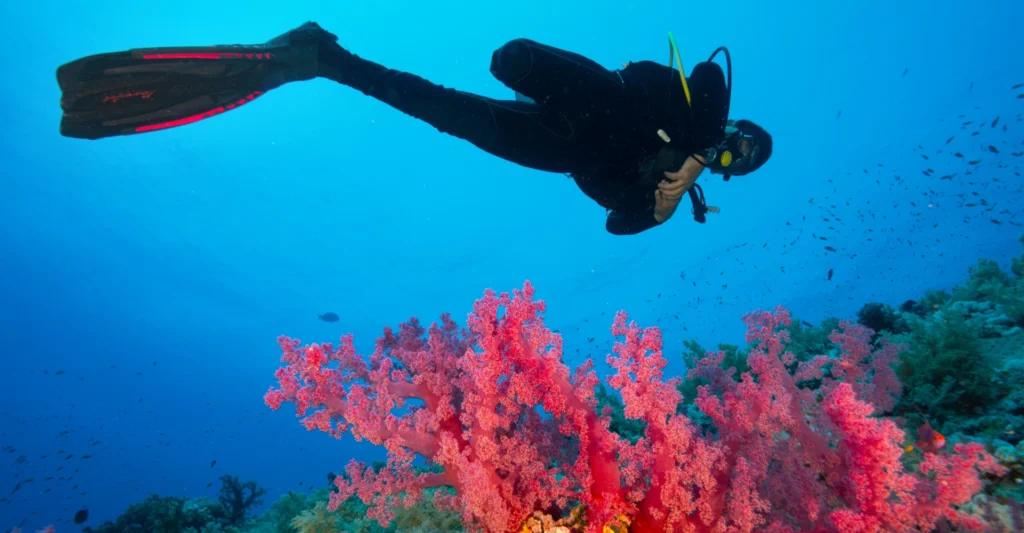
- Scuba diving: introductory and certified dives are available for anyone who wants to go below snorkel depth
- Helmet diving (sea walker): a good option for those who’d prefer to keep their head dry
- Glass bottom boat: a dry way to see the reef, popular with families and younger kids
- Underwater observatory: a viewing chamber you can access directly from the pontoon
- Waterslide: a 30-metre spiral slide, Moore Reef’s pontoon is the only one on the Great Barrier Reef with this feature
- Kids’ pool with lifeguards: a supervised pool for children while adults are out in the water
- Buffet lunch and bar: served on board
Ready to Go?
Moore Reef is a solid first choice for anyone snorkelling the Great Barrier Reef from Cairns. The pontoon handles the logistics, the conditions are reliable, and the marine life gives you plenty to talk about on the way home.
1 Day Great Barrier Reef Pontoon Adventure is the most popular way to visit, with snorkelling, equipment, and lunch all included. If you’d rather focus purely on the water, take a look at the Great Barrier Reef Premium Snorkelling Tour as well.
Frequently Asked Questions
Is Moore Reef good for beginners who have never snorkelled before?
Yes. The pontoon platform means you enter the water in a calm, controlled environment rather than from open water. Equipment is provided, lessons are available on site, and lifeguards are on duty all day. No prior experience needed.
How long does it take to get to Moore Reef from Cairns?
The boat trip takes about 90 minutes each way from the Cairns Esplanade marina. Most day tours spend four to five hours on the reef, with a mid-afternoon return to Cairns.
How far is Moore Reef from Cairns?
Moore Reef is approximately 50 kilometres offshore from Cairns, in the outer section of the Great Barrier Reef Marine Park.
What marine life can I see snorkelling at Moore Reef?
Sea turtles, Maori wrasse, clownfish, batfish, damselfish, Moorish idols, parrotfish, and occasionally black or white tip reef sharks. The coral gardens include staghorn, brain, mushroom, and finger coral formations throughout.
Is snorkelling equipment included on the tour?
Yes, snorkel gear is included with the tour.
Can I snorkel at Moore Reef if I can’t swim?
Yes. Non-swimmers can snorkel with a flotation vest and supervision from lifeguards on site.
What is the best time of year to snorkel at Moore Reef?
The dry season, May to October, generally offers the calmest seas and the best visibility. That said, Moore Reef is an outer reef with solid year-round conditions. Even in the wet season, plenty of days are perfectly good for snorkelling.
Other Tips & Articles
Check out our other Great Barrier Reef Tours


