

6 out of 7 turtle species are found on the Great Barrier Reef
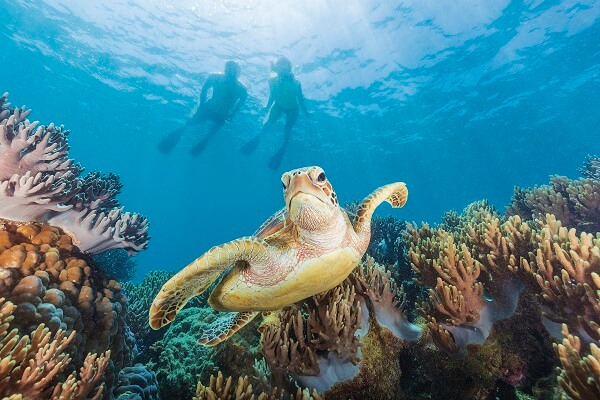
Turtles are some of the most remarkable marine creatures in the world. Known for their enormous shell and their gentle movement through the ocean, these majestic creatures are super humbling to see.
The Great Barrier Reef is home to lots of female turtles, who lay their eggs on the shores every year. In the middle of the night, protected by darkness, turtles will crawl onto the beach shores and lay their eggs (they do this at night so that they are not harmed by predators).
It’s super rare to see a turtle on the sand along the Great Barrier Reef, so if you spot a female turtle laying her eggs in the sand, then you’re very lucky!
5 Super Cool Facts About Turtles
1. Only 1/1000 turtles will actually make it to the ocean and survive all the way into adulthood.
The survival rate for turtles is sadly quite low. That’s because there’s so much that can go wrong just before they reach the ocean. They hatch out of their eggs and then waddle towards the ocean, purely by instinct. But they have to make it to the ocean whilst avoiding predators – like birds and crabs.
They’re also hunted by marine predators. In fact, only 1 in 1000 turtles will make it until adulthood!
But if a turtle is lucky enough to survive, then it will live to around 100 years.
2. Turtles are some of the oldest mammals in the world.
Turtles are over 120 million years old. They evolved a long time before mammals did! They’re very ancient creatures. In fact, some fossils actually show that the oldest turtle has had the same body shape for over millions of years. This goes to show how well adapted they are!
3. The temperature of the sand will determine the gender of the turtle
The gender of a turtle is wholly dependent on the temperature of the sand when they are hatching. The cooler the sand, the more likely it’ll be a male. The warmer the sand, the more likely it’ll be a female.
4. Some turtles can hold their breath for over 5 hours underwater
Green Turtles can slow down their own heart rate all the way down. In fact, this drop in heart rate can be so dramatic that it can take up to 9 minutes between heartbeats. It also means they’re able to stay underwater for longer periods of time during feeding or resting times.
5. Turtles can carry a weight of up to 900kg
Their shells are really, really heavy. Normally, the buoyancy of the water helps turtles to float. But when females come onto the shores the lay their eggs, they have to work extra hard to support their shells under the weight!
And the amount of weight that they can carry on their back could go up to a whopping 900kg. Imagine how strong their body muscles must be to carry the weight of this?
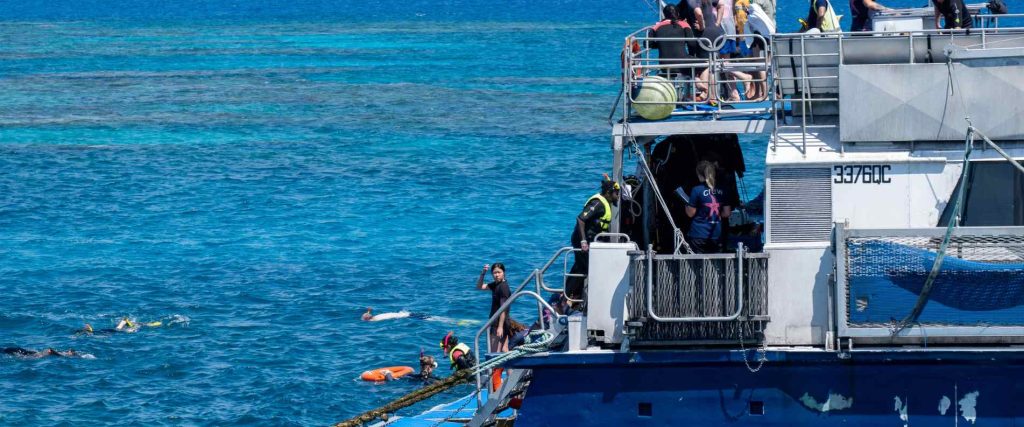
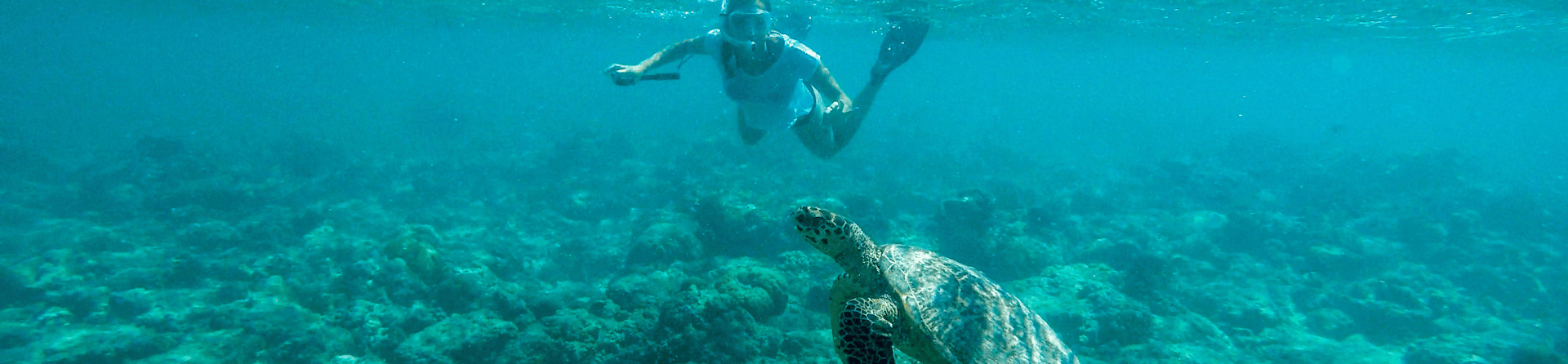
There are a few different ways you can experience these majestic creatures along the Great Barrier Reef! Join a snorkel tour and you’ll get to swim with turtles and experience these magical creatures for yourself.
Turtle conservation along the Great Barrier Reef
Protecting turtles along the Great Barrier Reef is a group effort and responsibility. There are different species of different types of turtles along the Great Barrier Reef, which are all looked after by a whole network of people who join forces to care for these majestic, respected creatures.
Managers of the land, Traditional Owners, marine researchers and volunteers around local communities will all work together to monitor nesting sites, protect the eggs and reduce pollution threats of habitat loss and climate change.
Other Tips & Articles


Check out our other Great Barrier Reef Tours